

Clinical Confidence
Physician-supported hospice care for the moments families need certainty
Cancer hospice care across Ventura and Los Angeles counties
Comfort first, with every symptom watched closely.

This service is for patients with advanced cancer who are focusing on comfort. The hospice team manages pain and symptoms, coordinates medications and supports the family. Care is provided at home or in the patient's care community.
Families deserve calm direction and clear answers.
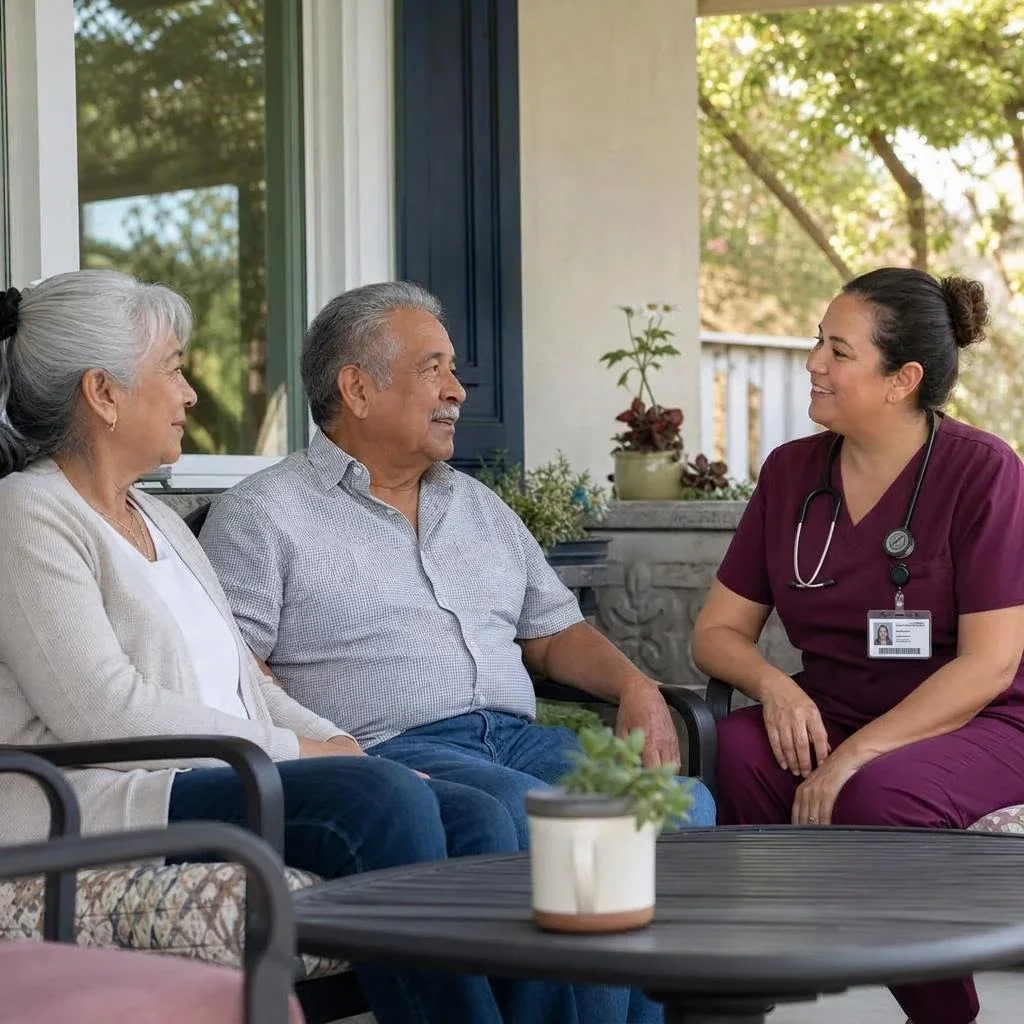
Families often consider hospice when treatment no longer helps, when the patient chooses to stop treatment or when hospital visits become frequent. An evaluation gives clear answers before any decision.
The patient's oncologist can stay informed and involved. The hospice physician directs comfort care and keeps the attending physician updated.
The Eternal Standard
Physician-supported hospice care for the moments families need certainty
You always know what is happening, what comes next and who to reach
Comfort for the whole person – mind, body, spirit and family
Accurate, private and ethical at every step
Hospice coverage depends on eligibility and the rules of your Medicare, Medi-Cal or private insurance plan. Eternal reviews benefits, coverage arrangements and potential costs before care begins.
Yes. The attending physician can remain part of care.
Hospice focuses on comfort. Treatments that relieve symptoms may continue when the hospice physician includes them in the plan of care.
The physician sets a medication plan, the nurse reviews it at each visit and a nurse is available by phone at any hour.
Families often consider hospice when treatment no longer helps, when the patient chooses to stop treatment or when hospital visits become frequent. An evaluation gives clear answers before any decision is made.
Pain, nausea, appetite loss, fatigue and breathlessness. The plan is reviewed as needs change.